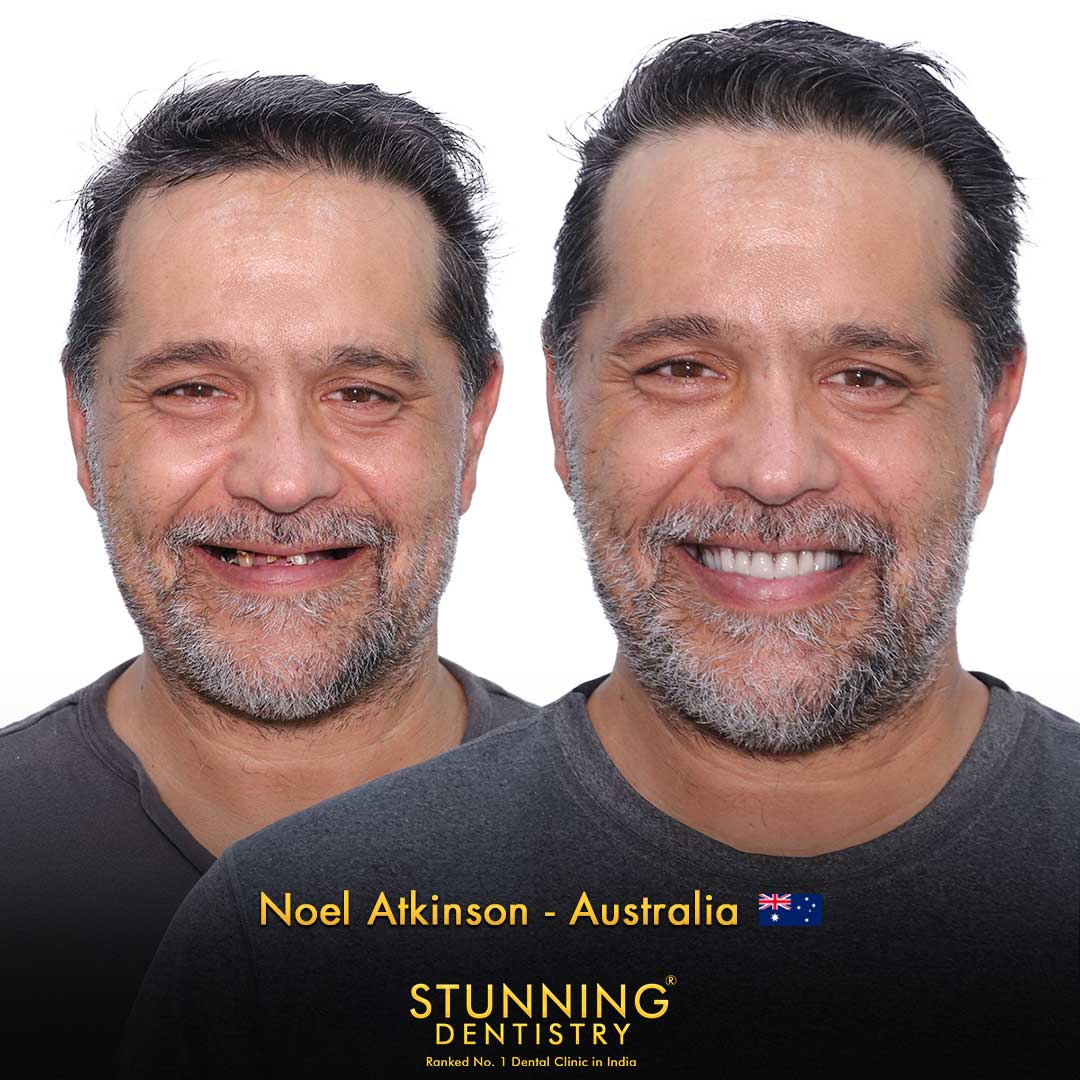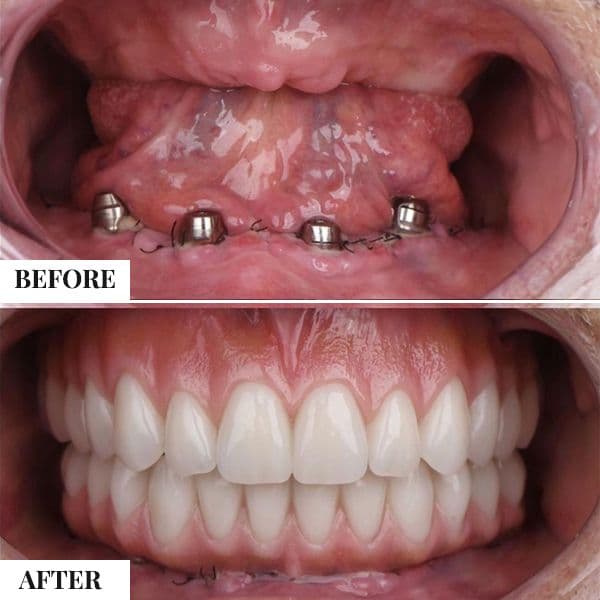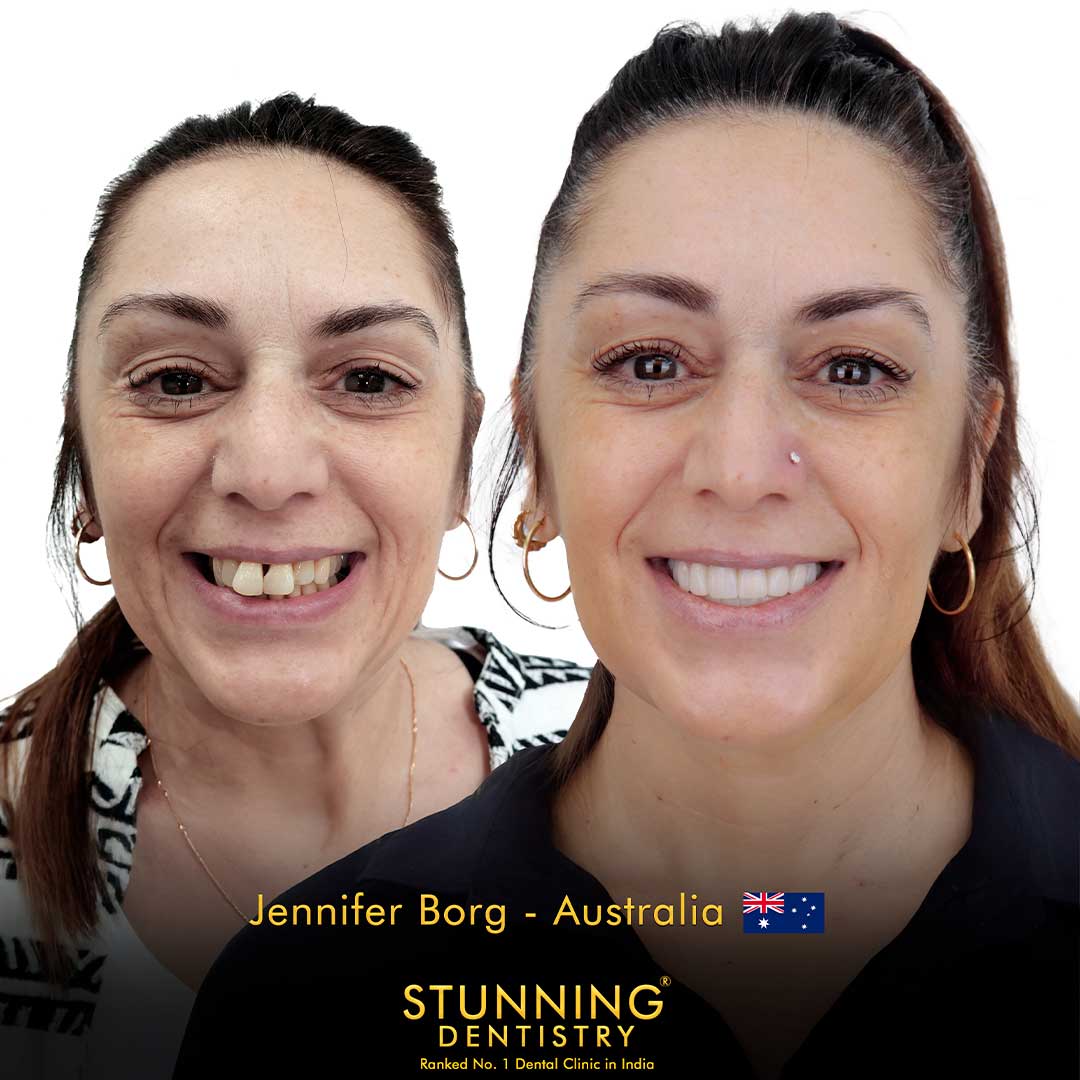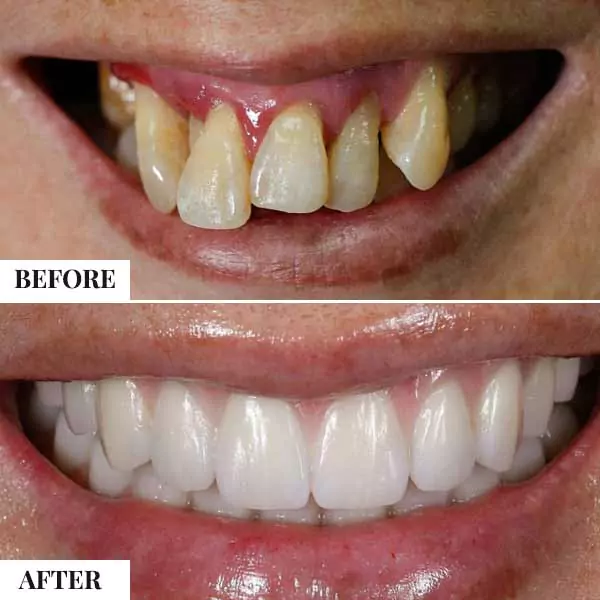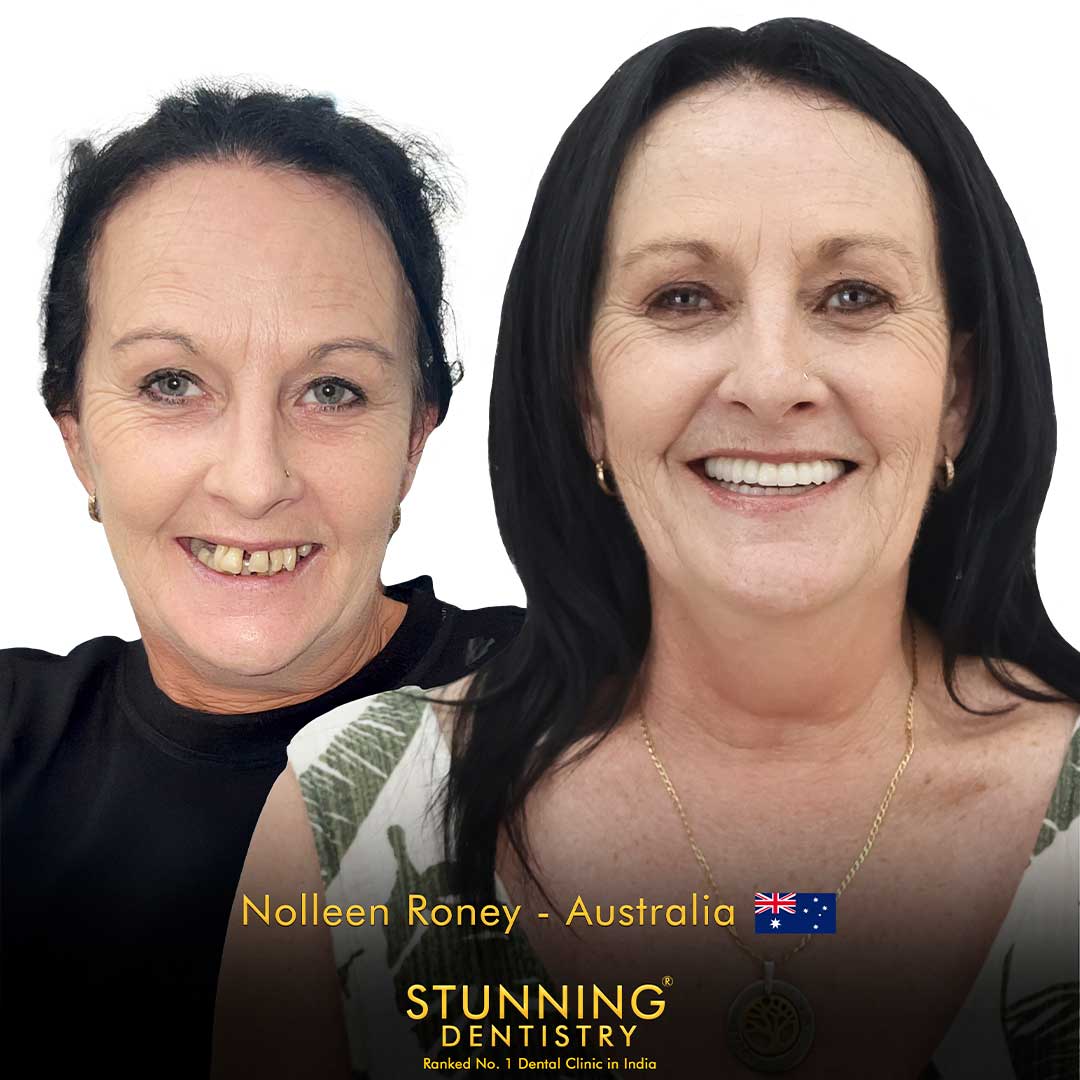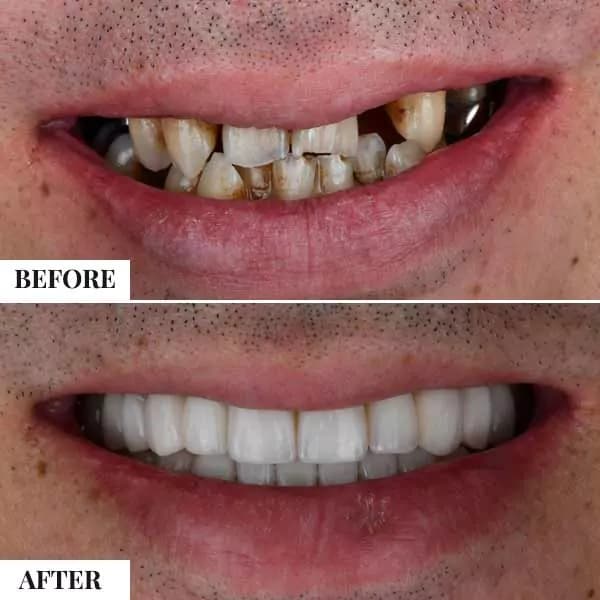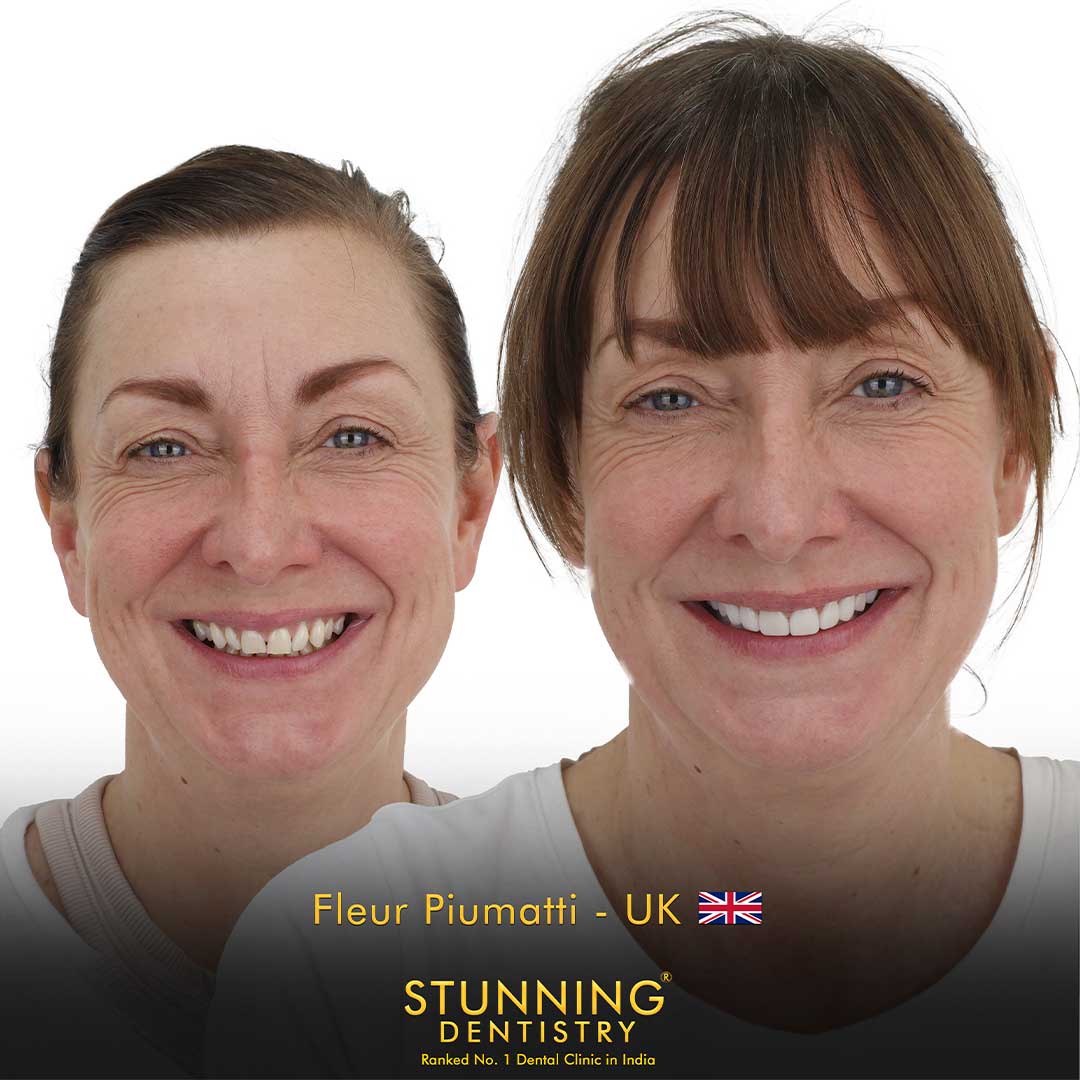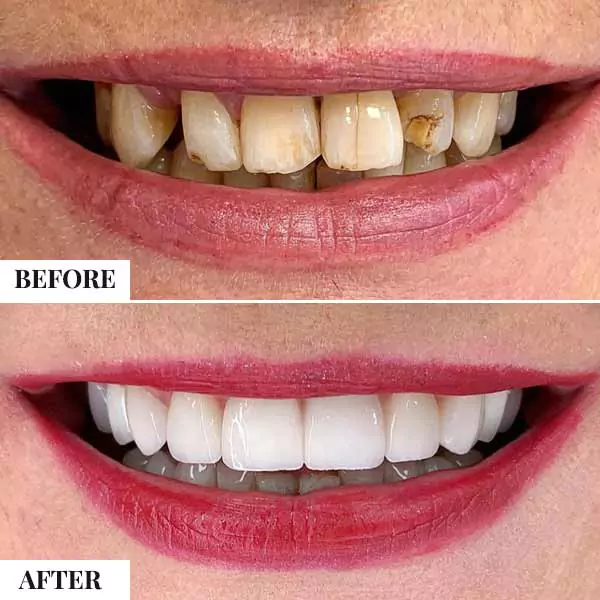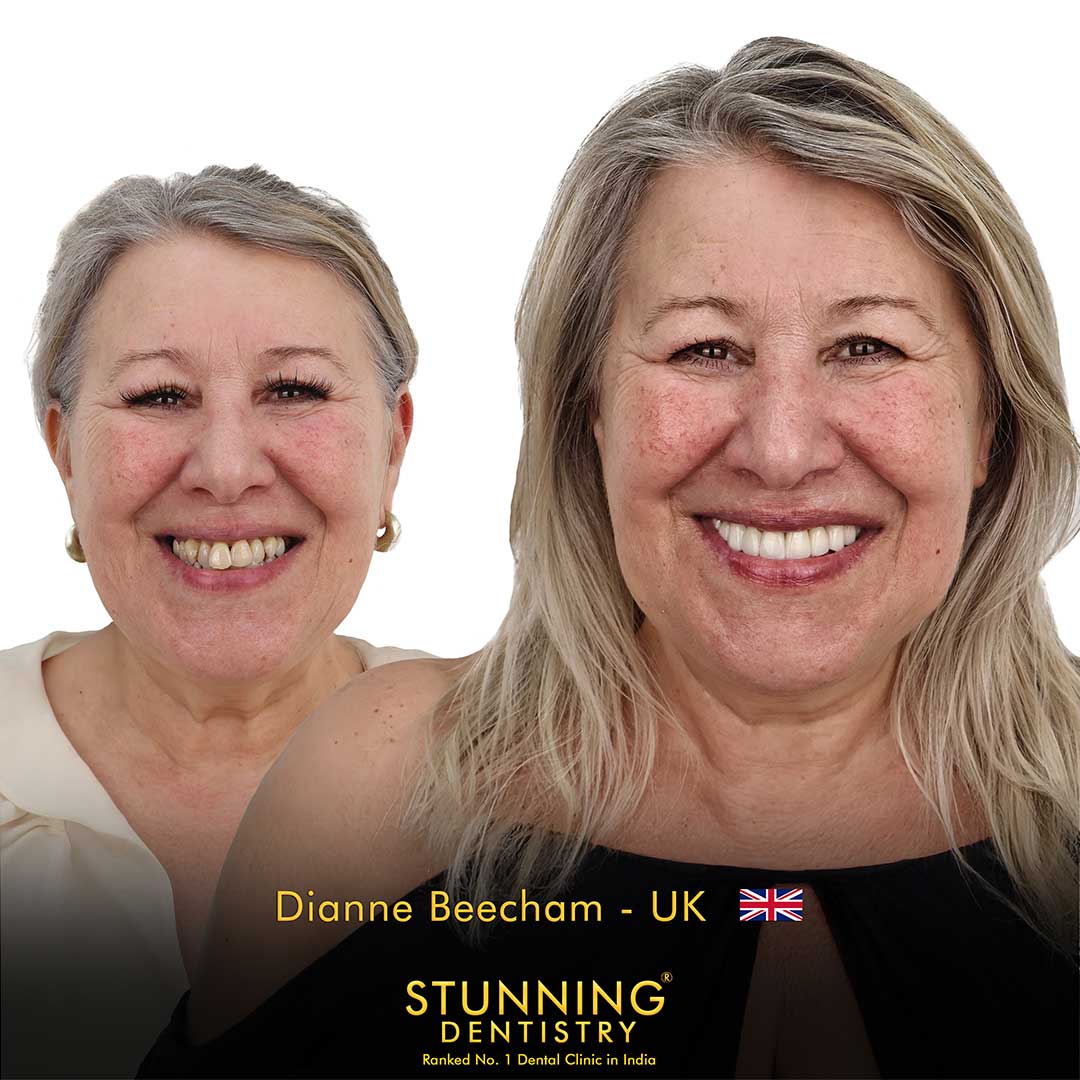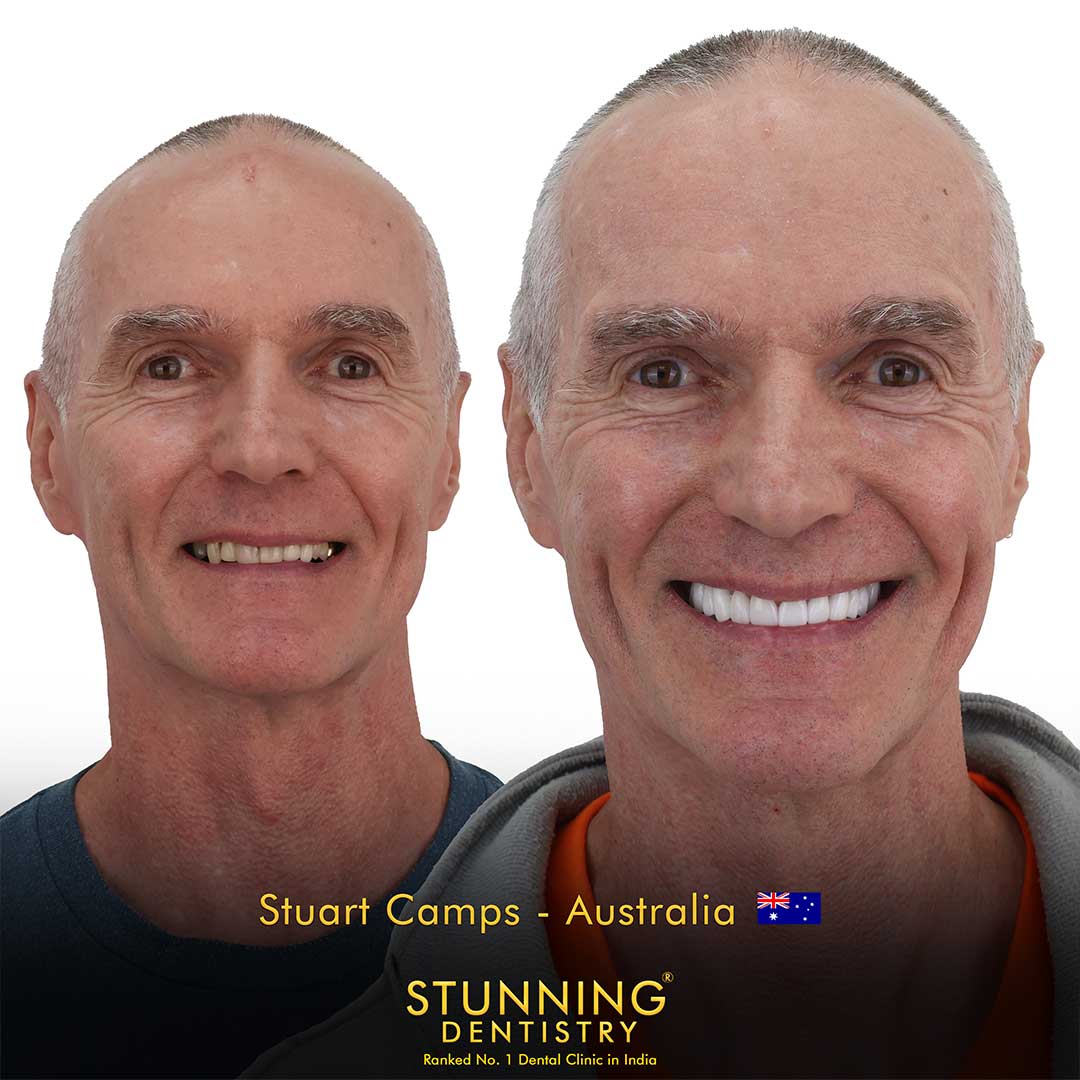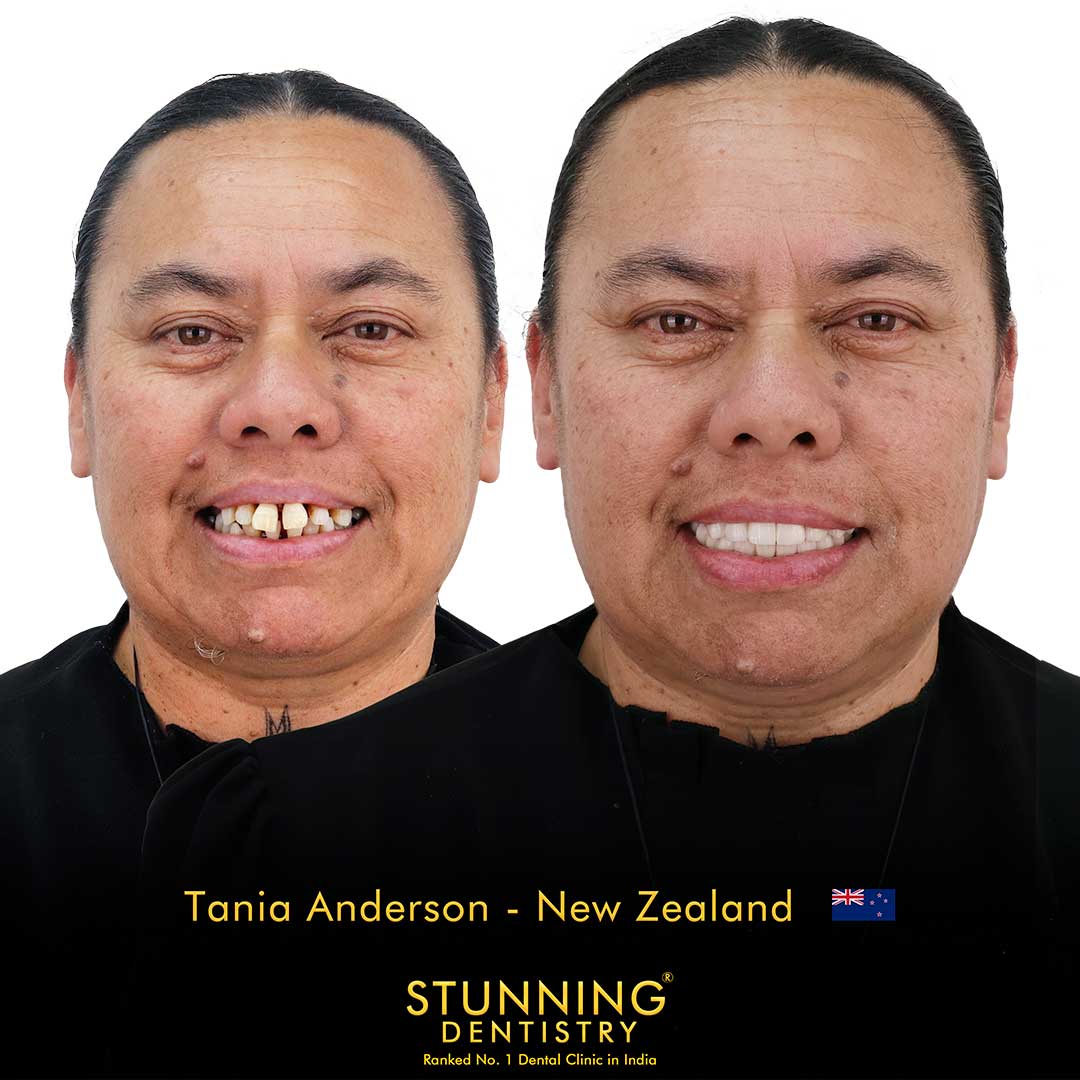
Full-Arch Zirconia Bridge, The Definitive Implant Prosthesis
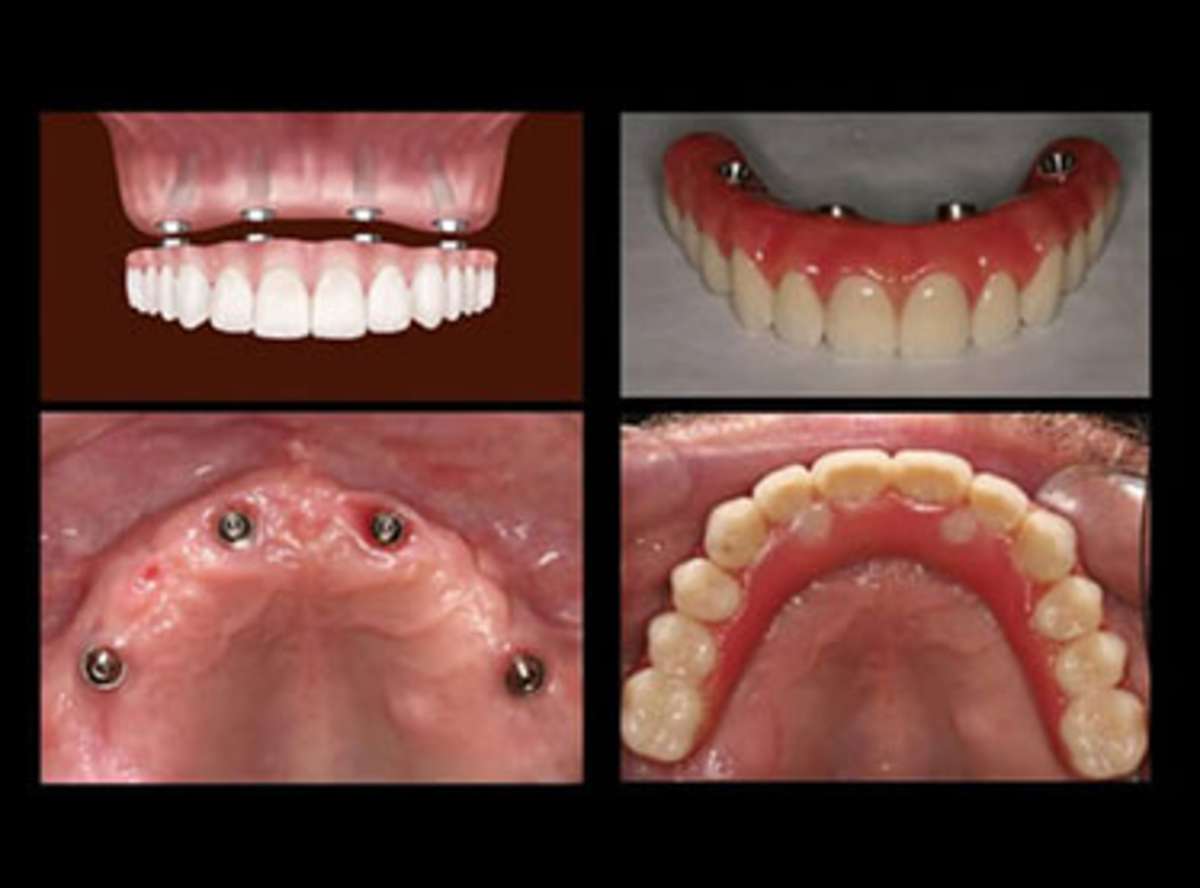
- A full-arch zirconia bridge is a one-piece prosthesis, milled from high-strength zirconium dioxide, screw-retained to dental implants and replacing all teeth in one jaw.
Monolithic zirconia achieves 900–1,200 MPa flexural strength and 98.6% survival at 6 years, compared to 54% at 5 years for older metal-acrylic designs.






Overview <!-- viewport: condense tablet -->
The implant is the anchor. The prosthesis is what the patient sees, eats with, and smiles through, and in full-arch rehabilitation, the prosthetic material is the variable that most determines long-term outcome. This distinction matters because the same implant protocol (All-on-4, All-on-6, All-on-8) can be completed with fundamentally different prosthetic materials, each with documented survival differences of a magnitude that should inform every patient's decision.
At Stunning Dentistry, monolithic or modified monolithic zirconia is the standard recommendation for definitive full-arch prostheses. The complete workflow, from digital scan to sintered, glazed, and delivered prosthesis, is performed in-house. No external laboratory. This direct control over fabrication quality is the same standard applied to every case regardless of the patient's origin country.
| Zirconia Bridge Parameter | Value |
|---|---|
| Flexural strength | 900–1,200 MPa |
| Monolithic zirconia survival (6 years) | 98.6% |
| Metal-acrylic comparison survival (5 years) | 54% |
| Fabrication | CAD/CAM milling + high-temperature sintering (1,530°C) |
| Stain resistance | Does not stain or discolour |
| Metal content | None |
| Reparability | Difficult chairside (unlike acrylic) |
| Weight | Heavier than acrylic |
Questions about this procedure?
Why Prosthetic Material Determines Long-Term Outcome <!-- viewport: condense tablet -->
Why does the prosthetic material matter in full-arch implant rehabilitation?
> The implant protocol (All-on-4, All-on-6) determines how the teeth are anchored. The prosthetic material determines how long they last. Metal-acrylic prostheses fail at 54% by 5 years. 6% at 6 years. The difference is not marginal, it determines whether the prosthesis requires replacement within a decade.
The biomechanical environment of a full-arch prosthesis is demanding. All masticatory forces, chewing, bruxism, clenching, are transmitted through the prosthetic material to the implant-prosthesis connection. Materials that cannot withstand this loading environment fracture or wear. Acrylic, the material in older metal-acrylic full-arch prostheses, has a flexural strength of 80–120 MPa. Zirconia has 900–1,200 MPa. This ten-fold difference in strength is the mechanical explanation for the survival divergence in clinical data.
At Stunning Dentistry, patients are counselled explicitly on the material comparison before the definitive prosthesis is fabricated. The choice between a hybrid provisional, a modified monolithic design, or full monolithic zirconia is made with the patient's understanding of the survival data, not based on cost tier alone.
Ready to discuss your options?
What Is a Full-Arch Zirconia Bridge? <!-- viewport: condense tablet -->
What is a full-arch zirconia bridge?
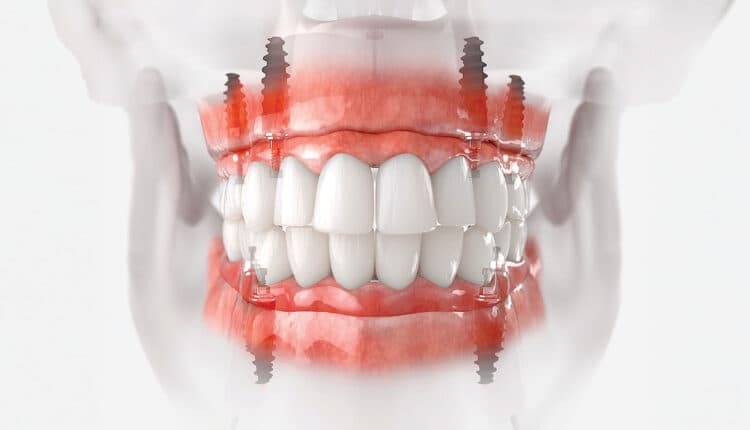
> A full-arch zirconia bridge is a one-piece (or segmented) prosthesis replacing all teeth in one jaw, milled from zirconium dioxide and screw-retained to dental implants. The patient cannot remove it. It is the definitive restoration in full-arch implant rehabilitation, attached to implants placed via All-on-4, All-on-6, All-on-8, or other protocols.
A full-arch zirconia bridge is a screw-retained prosthesis: it is attached to the implants by small titanium screws that pass through access holes in the prosthetic surface, and only a clinician can remove it for maintenance. The patient cannot take it out. This distinguishes it from an overdenture, which the patient removes daily for cleaning.
The bridge connects to the implants via titanium abutments. In most full-arch protocols (All-on-4, All-on-6), the abutments are part of the implant system and the bridge is fabricated to fit them precisely. Framework fit is critical, any misfit creates stress concentrations at the implant-prosthesis interface that can lead to screw loosening or implant overload. The digital CAD/CAM workflow ensures sub-millimetre dimensional accuracy.
Curious about costs and timelines?
Material Properties Compared <!-- viewport: condense tablet -->
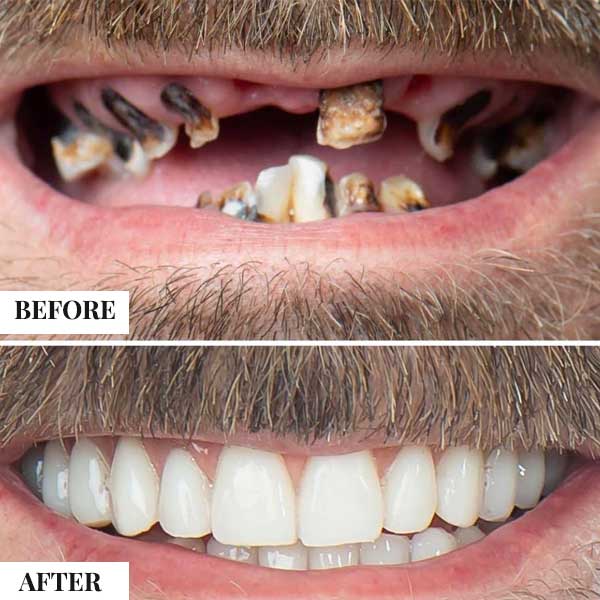
Monolithic zirconia is the strongest prosthetic material available for full-arch rehabilitation. The survival difference versus metal-acrylic is the largest documented outcome gap in full-arch prosthetics literature. This does not mean metal-acrylic has no role, it is appropriate for provisional use, for cases requiring acrylic flange lip support, and for patients where the cost of zirconia is a genuine barrier, but the trade-off in durability must be understood.
| Property | Monolithic Zirconia | Hybrid (Metal-Acrylic) | Metal-Ceramic |
|---|---|---|---|
| Flexural strength | 900–1,200 MPa | 80–120 MPa (acrylic) | 500–700 MPa (porcelain veneer) |
| Fracture resistance | Highest in dentistry | Lowest, fracture prone | Moderate |
| 5-year survival | 93.7–99.3% | 54% | 93.7% |
| 10-year survival | Data emerging (favourable) | 32% | Limited data |
| Stain resistance | Does not stain | Stains and discolours over time | Porcelain does not stain |
| Biocompatibility | Excellent, no metal | Good | Metal allergy possible |
| Weight | Heavier than acrylic | Lightest | Heaviest |
| Reparability | Difficult chairside | Easy chairside | Moderate |
| Aesthetics | Excellent, natural translucency | Acceptable; degrades | Excellent |
| Ideal use | Definitive long-term restoration | Provisional; specific cases | Alternative definitive option |
Want a personalised treatment plan?
Types of Zirconia Prostheses <!-- viewport: condense tablet -->
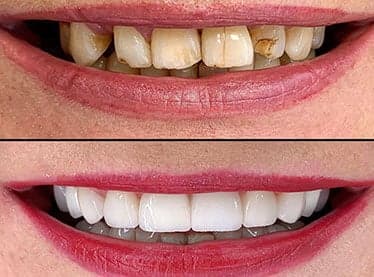
At Stunning Dentistry, monolithic or modified monolithic zirconia is the standard for definitive full-arch prostheses. Fully veneered zirconia carries unacceptable chipping risk (50% at 5 years in published data) for full-arch applications and is not recommended for this indication.
| Type | Description | Strength | Chipping Risk | Aesthetics |
|---|---|---|---|---|
| Monolithic zirconia | Milled from single material; no porcelain veneer | Highest: 900–1,200 MPa | Lowest | Excellent; natural translucency available |
| Modified monolithic | Monolithic base; minimal porcelain in anterior aesthetic zone | High (framework) | Low to moderate in veneered area | Highest |
| Veneered zirconia | Zirconia framework; full porcelain coverage | Framework high; veneer at risk | 50% at 5 years in studies | Highest |
| Zirconia on titanium framework | Zirconia teeth bonded to milled titanium base | Framework high | Low to moderate | Excellent |
Questions about this procedure?
Survival Data <!-- viewport: condense tablet -->
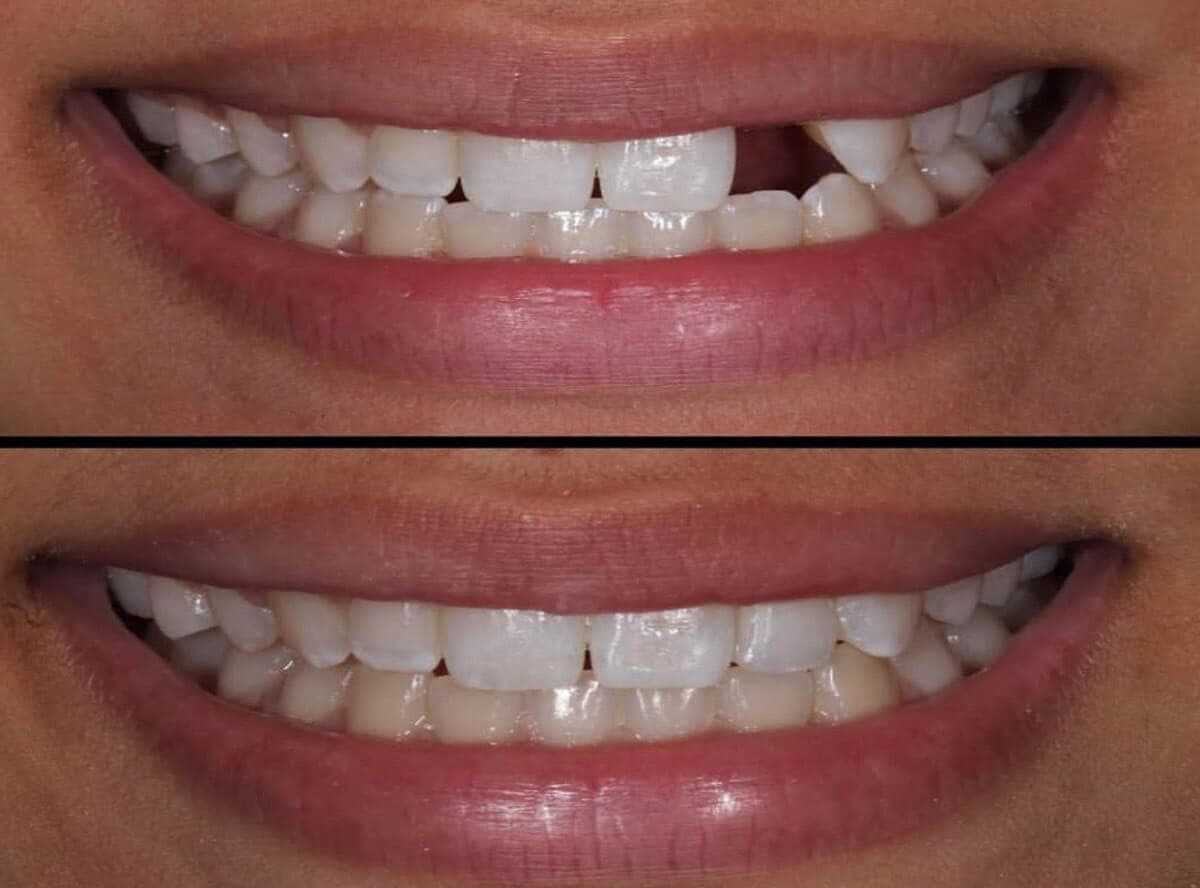
The survival data contrast is the most important clinical fact on this page. 98.6% versus 54% at matched follow-up periods. The difference is not incremental. For a patient investing in full-arch implant rehabilitation, the prosthetic material selected for the definitive restoration determines whether the investment survives a decade or requires major remediation within five years.
| Study | Design | Survival Rate | Notes |
|---|---|---|---|
| Papaspyridakos et al. (2024), Journal of Prosthodontics | 115 monolithic zirconia IFCDPs, 71 patients | 98.6% at up to 6 years | Only 2 fractures in entire cohort |
| Journal of Prosthetic Dentistry | 2,039 complete-arch zirconia prostheses | 99.3% at 5 years | Veneered porcelain restricted to gingival zone |
| Journal of Prosthetic Dentistry | Metal-acrylic full-arch prostheses | 54% at 5 years; 32% at 10 years | Catastrophic acrylic fracture = 61% of failures |
| Systematic review | Zirconia vs metal-ceramic FDPs | Zirconia superior across all domains | Clinical Oral Implants Research |
Ready to discuss your options?
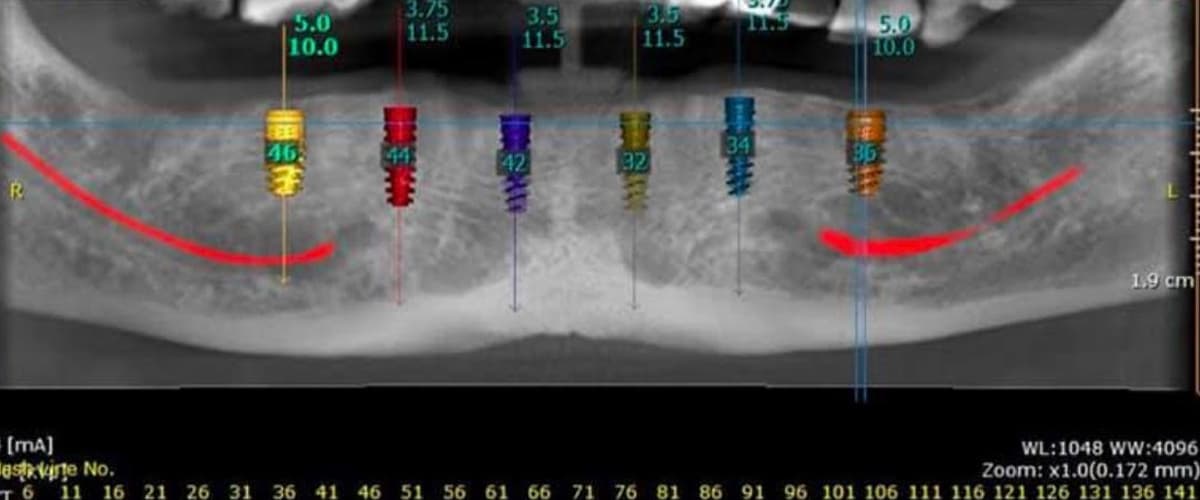
The Digital Workflow <!-- viewport: condense tablet -->
The full-arch zirconia bridge is a product of digital dentistry. The entire workflow at Stunning Dentistry is in-house:
This workflow produces a prosthesis that is: dimensionally accurate (fit verified before delivery), aesthetically customised (staining matched to photographs), and clinically verified (occlusal contacts checked at delivery). No external laboratory involvement, the clinical and prosthetic teams interact directly.
Curious about costs and timelines?
Indications <!-- viewport: condense tablet -->
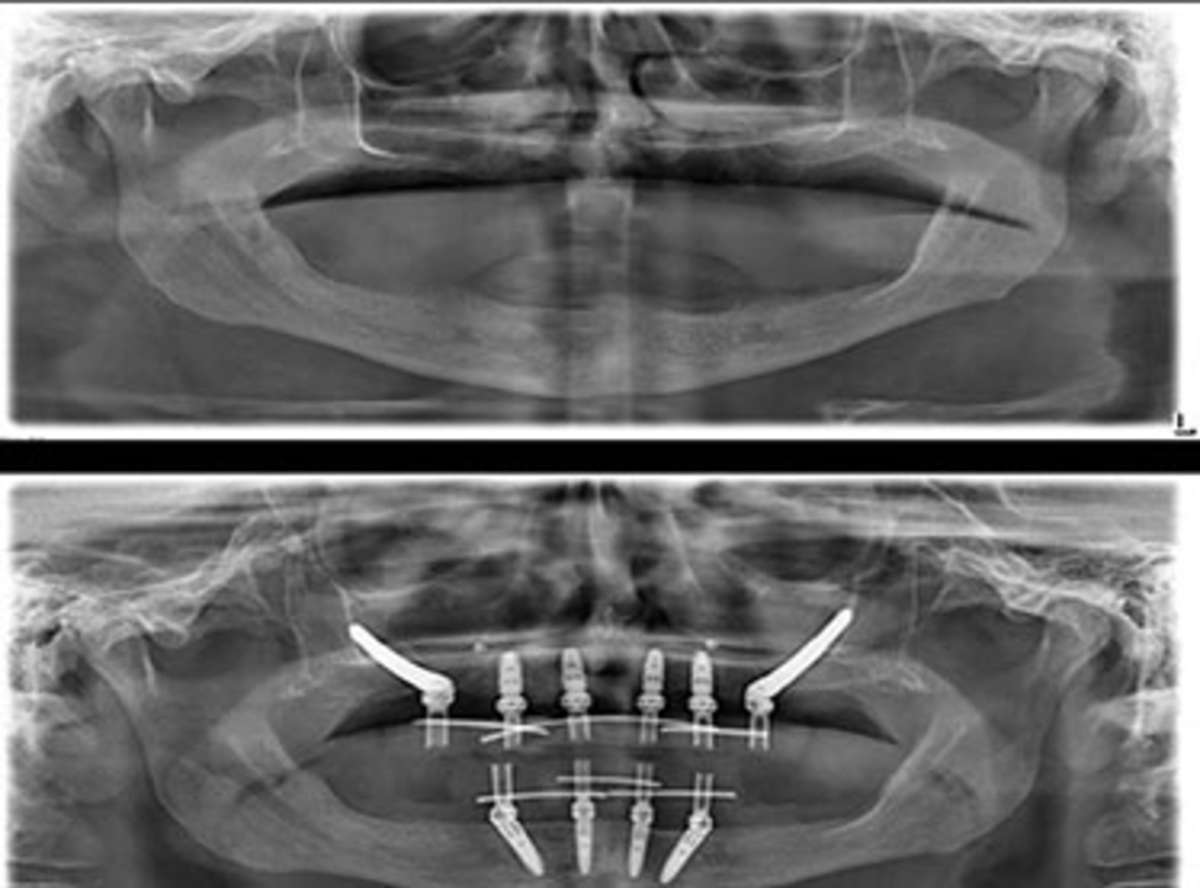
Full-arch zirconia bridges are indicated for:
- Any full-arch implant rehabilitation (All-on-4, All-on-6, All-on-8, zygomatic configurations) requiring a definitive prosthesis
- Patients who have completed the provisional healing phase and confirmed vertical dimension, aesthetics, and function
- Patients with strong bite forces or bruxism, zirconia is the strongest material available
- Patients who want a permanent, stain-free, long-lasting restoration
- Replacement of worn or fractured metal-acrylic provisional prostheses at the 6-month upgrade point
Want a personalised treatment plan?
Advantages and Limitations <!-- viewport: condense tablet -->
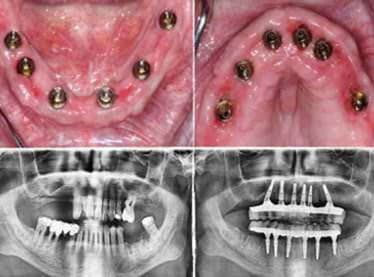
- Unmatched strength: 900–1,200 MPa flexural strength eliminates catastrophic fracture risk across normal function
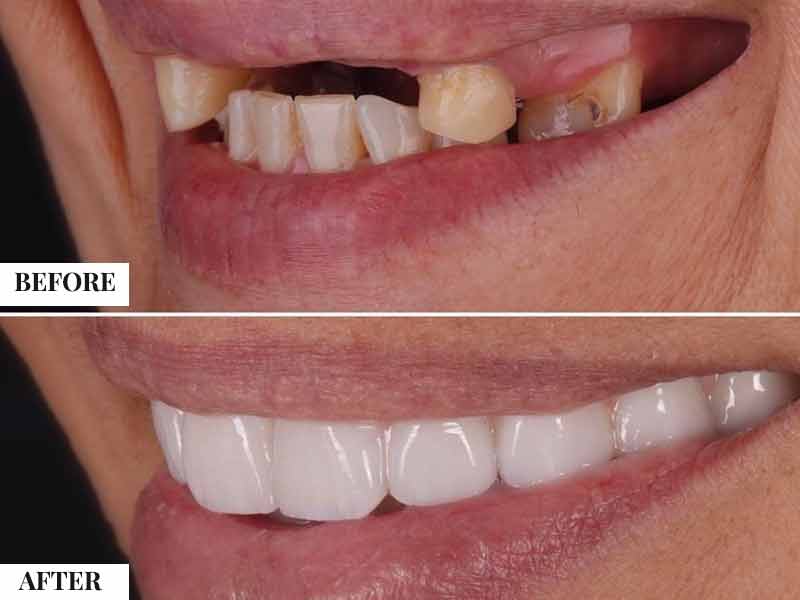
- Aesthetics: natural translucency and shade matching, indistinguishable from natural teeth at normal viewing distance
- Biocompatible: no metal components; eliminates allergic reactions and grey metal margins visible at gum line
- Stain-resistant: does not discolour over decades
- Hygienic: smooth polished surface resists plaque accumulation
Limitations:
- Cost: zirconia is the most expensive prosthetic option for full-arch rehabilitation
- Weight: heavier than acrylic, some patients notice the difference initially; adaptation is normal
- Reparability: if chipping occurs, chairside repair is difficult, unlike acrylic which can be repaired in-chair
- Opposing arch wear: monolithic zirconia is hard and can cause wear on opposing natural teeth or softer prosthetic materials; occlusal management is essential
- Framework fit precision: any dimensional error creates stress concentrations at implant connections; requires accurate digital workflow
Questions about this procedure?
Step-by-Step at Stunning Dentistry <!-- viewport: condense tablet -->
The full-arch zirconia bridge is the final stage of an implant rehabilitation protocol. The sequence:
1. Osseointegration confirmation (3–6 months post-implant placement)
2. Digital impression, 3Shape TRIOS intraoral scan with scan bodies on each implant
3. Provisional evaluation, confirm vertical dimension, midline, tooth length, and aesthetic approval with the provisional prosthesis in place
4. CAD design, prosthesis designed to confirmed measurements; virtual try-in shared with patient
5. Milling and sintering, in-house fabrication; typically 3–5 working days
6. Framework try-in, fit verified before final ceramic surface is applied
7. Final delivery, bridge seated, occlusion adjusted, screws torqued; access holes sealed with composite
8. Aftercare briefing, cleaning protocol, night guard fitting, annual review schedule
Ready to discuss your options?
Aftercare <!-- viewport: condense tablet -->
A night guard is mandatory for all full-arch zirconia prosthesis patients. The zirconia surface is hard enough to resist fracture under normal function but concentrated nocturnal bruxism forces can stress the implant-prosthetic connections even when the prosthesis itself remains intact. The night guard protects the connections, not primarily the zirconia.
Curious about costs and timelines?
Cost Logic for French Patients <!-- viewport: condense tablet -->
The full-arch zirconia bridge is the prosthetic component of a complete implant rehabilitation. Costs below reflect the prosthesis cost as a component of total treatment. Total treatment costs include implant placement and all preceding phases.
| Component | France, Per Arch | Stunning Dentistry, New Delhi, Per Arch |
|---|---|---|
| Full-arch zirconia prosthesis (definitive) | €12,000–€20,000 | €5,000–€9,000 |
| As part of All-on-4 total treatment | See All-on-4 page | See All-on-4 page |
| Flights from France | Included (local) | €600–€1,000 return |
| Accommodation (5 nights for prosthesis trip) | Included (local) | €500–€800 |
| **Saving on prosthesis component alone** | , | **€5,000–€13,000 per arch** |
Want a personalised treatment plan?
Myth Deconstruction <!-- viewport: condense tablet -->
Myth: All implant prostheses last equally long.
Veneered zirconia carries a 50% chipping rate at 5 years in published full-arch studies. The porcelain veneer is the failure point. For full-arch applications, monolithic or minimally veneered designs provide superior durability with equivalent or nearly equivalent aesthetics.
Questions about this procedure?
People Also Ask
What is the difference between a zirconia bridge and an acrylic bridge?
Yes, the zirconia prosthesis is designed for full function. Patients eat hard, crunchy, chewy foods without restriction. Biting directly into very hard foods (ice, hard sweets) generates forces that no prosthetic material is designed to withstand, this is true of natural teeth as well.
Ready to discuss your options?
Ask Your Doctor
1. Is my treatment plan specifying a provisional or a definitive prosthesis, and what material is the definitive prosthesis?
2. If the initial prosthesis is acrylic or hybrid, when is the upgrade to zirconia planned?
3. Is your fabrication workflow in-house or outsourced to an external laboratory?
4. What is your protocol if a prosthetic screw loosens, can it be addressed remotely or does it require an in-person appointment?
5. What is the warranty on the definitive prosthesis?
Curious about costs and timelines?
Want a personalised treatment plan?
Book a Consultation
If you are planning full-arch implant rehabilitation and want to understand the prosthetic material options:
The implant anchors the restoration. The material determines how long it lasts.
Questions about this procedure?
Clinical Review
Medically Reviewed
Protocols aligned with contemporary implant prosthodontics material standards.
Ready to discuss your options?
Specialist-only treatment planning
- Remote file review before travel
- Evidence-led treatment checkpoints
No waiting list for eligible cases
- Remote file review before travel
- Evidence-led treatment checkpoints
Trip coordinated with care timeline
- Remote file review before travel
- Evidence-led treatment checkpoints
Our Partners


Why Us
See your new smile instantly!
This tool will help you understand potential structural and aesthetic changes before finalizing treatment decisions.